

Deep in the rainforest of southern Guyana, the Upper Essequibo flows past the village of Apoteri. Fishing pressure is minimal here, and 47 fish species have been documented in the area. You fish for peacock bass, payara, arapaima, arowana, piranha and several large catfish species, often without seeing another boat.
The trip at a glance
- Destination: Jaguar Explorer Lodge on the Upper Essequibo, near the village of Apoteri in southern Guyana
- Season: September to mid-March
- Species: peacock bass, payara, arapaima, arowana, piranha, silver drum and large catfish
- Method: spin fishing with surface lures, jerkbaits and jigs from a boat
- Fishing days: seven full days with a guide
- Group size: maximum 12 guests at the lodge
The journey into the rainforest
You fly to Georgetown and spend the first night at Kanuku Suites. The next morning, a small plane takes you to the jungle airstrip at Apoteri Village. From there, you continue by boat to Jaguar Explorer Lodge, arriving in the early afternoon. If time allows, you can make a few casts in the "home pool" on your first evening.
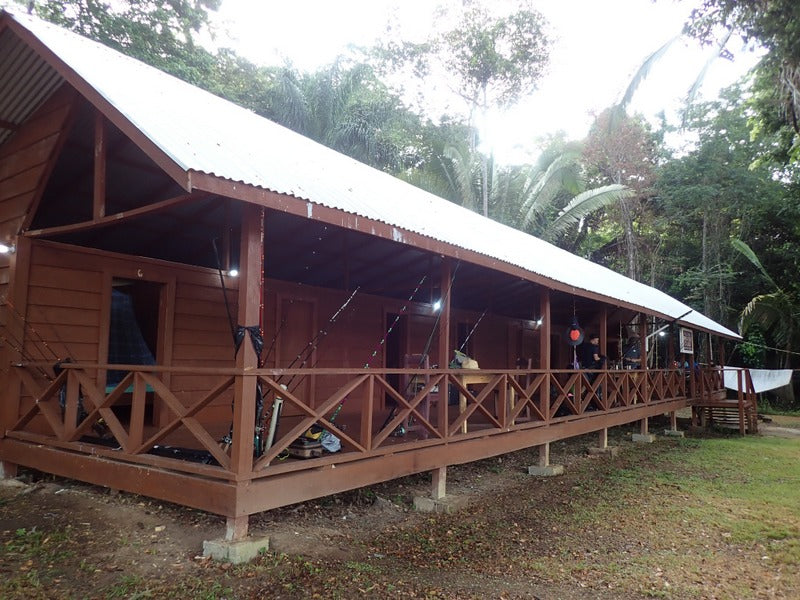
The lodge is located along the Upper Essequibo, between King William Falls and Apoteri. It accommodates a maximum of 12 guests, and you stay in twin rooms with two anglers per room. Wi-Fi is available via Starlink, so you can keep in touch with home.
The people behind the fishing
The guides and staff come from Apoteri, a village of around 250 people from the Makushi and Waipashana peoples. People here have lived alongside the river for generations. Fishing tourism provides sustainable jobs in an area where young people might otherwise be drawn to precarious gold mines, and that is an important part of why we take this trip.
The species
- Peacock bass, colorful and explosive, weighing over 8 kilos. Takes surface lures with full force.
- Payara, the vampire-toothed predatory fish that hunts in fast-flowing water.
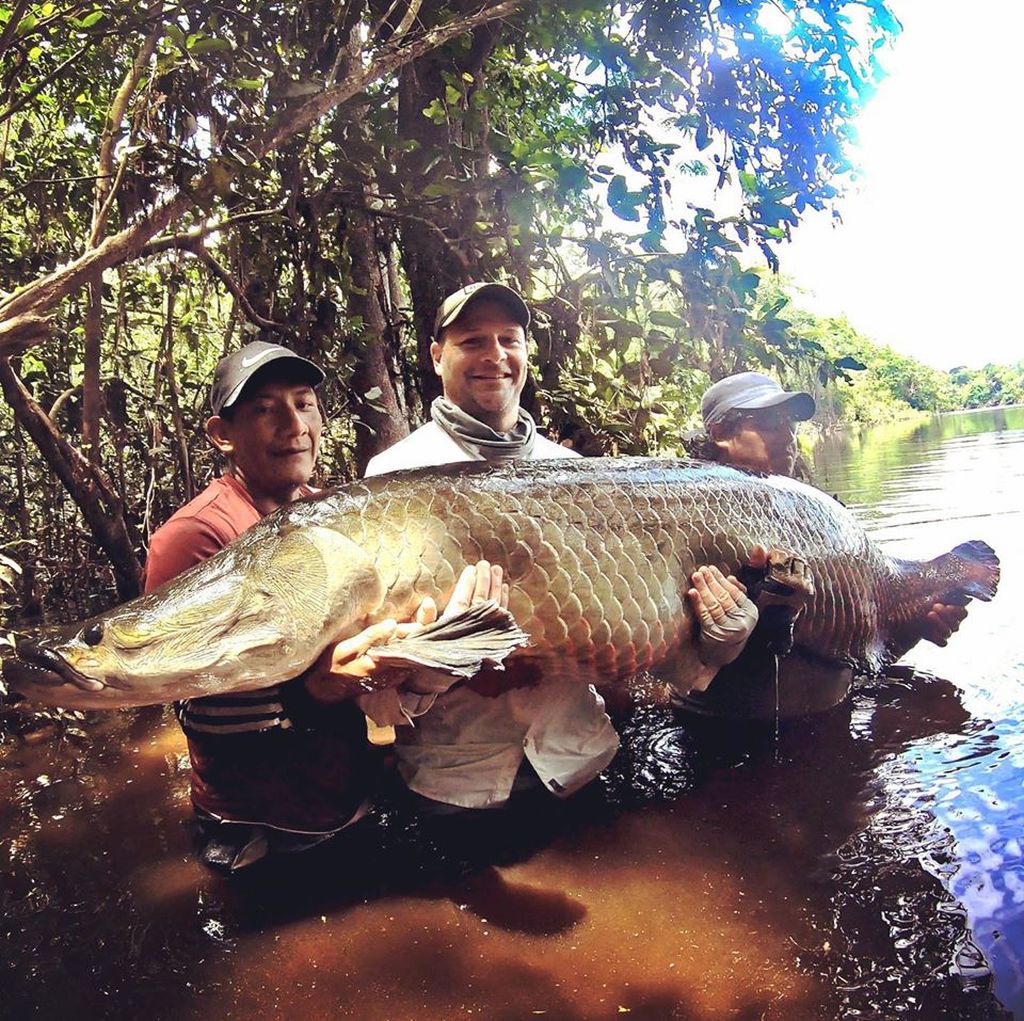
- Arapaima, which can exceed 180 kilograms and reach four meters in length. Fished with barbless circle hooks and careful catch and release.
- Arowana, which grows large here and readily takes topwater lures and flies.
- Piranha, both red-eye and black piranha can weigh over 5 kilograms.
- Silver drum weighing up to 6 kilograms, striking hard at jigs in deep pools.
- Large catfish such as redtail, jau, and piraiba, with piraiba weighing over 180 kilograms.
What the fishing days look like
You have seven full days of guided fishing from a boat in rivers, backwaters, and deep pools. You target peacock bass in calmer backwaters, payara in the current, and arapaima and giant catfish in the deeper sections. The method is chosen based on the species and location, from topwater lures and jerkbaits to jigs and, in some cases, natural bait. Rods, lines, and lures have their own equipment guide for Guyana.
All meals are served at the lodge, and water, soft drinks, and beer are included during your time at the camp.
When is the best time to go?
The season runs from September to mid-March. Water levels are favorable during this period, making it possible to reach the different fishing areas. Your passport must be valid for at least six months after your return home.
Interested in Guyana?
This trip is for you if you want to fish far from everything, in waters with minimal fishing pressure. Get in touch and we will tell you more about the arrangements.
View the fishing trip to Guyana
Frequently asked questions about fishing in Guyana
What fish species are found in Guyana?
47 species have been documented in the area. The focus is on peacock bass, payara, arapaima, arowana, piranha, silver drum, and large catfish such as redtail, jau, and piraiba.
When is the best time to go?
From September to mid-March, when water levels are favorable.
Do I need a visa?
No, not for tourist trips of up to 90 days. Your passport must be valid for at least six months after your return home.
Questions about the trip?
We are happy to help with arrangements and questions about the fishing. Call us at +46 313 758 200 or email us info@outsidetravels.com.